
WHEN MILAN SPEAKS PADEL
Milan, Where Padel Has Become Part of the Sporting Culture.
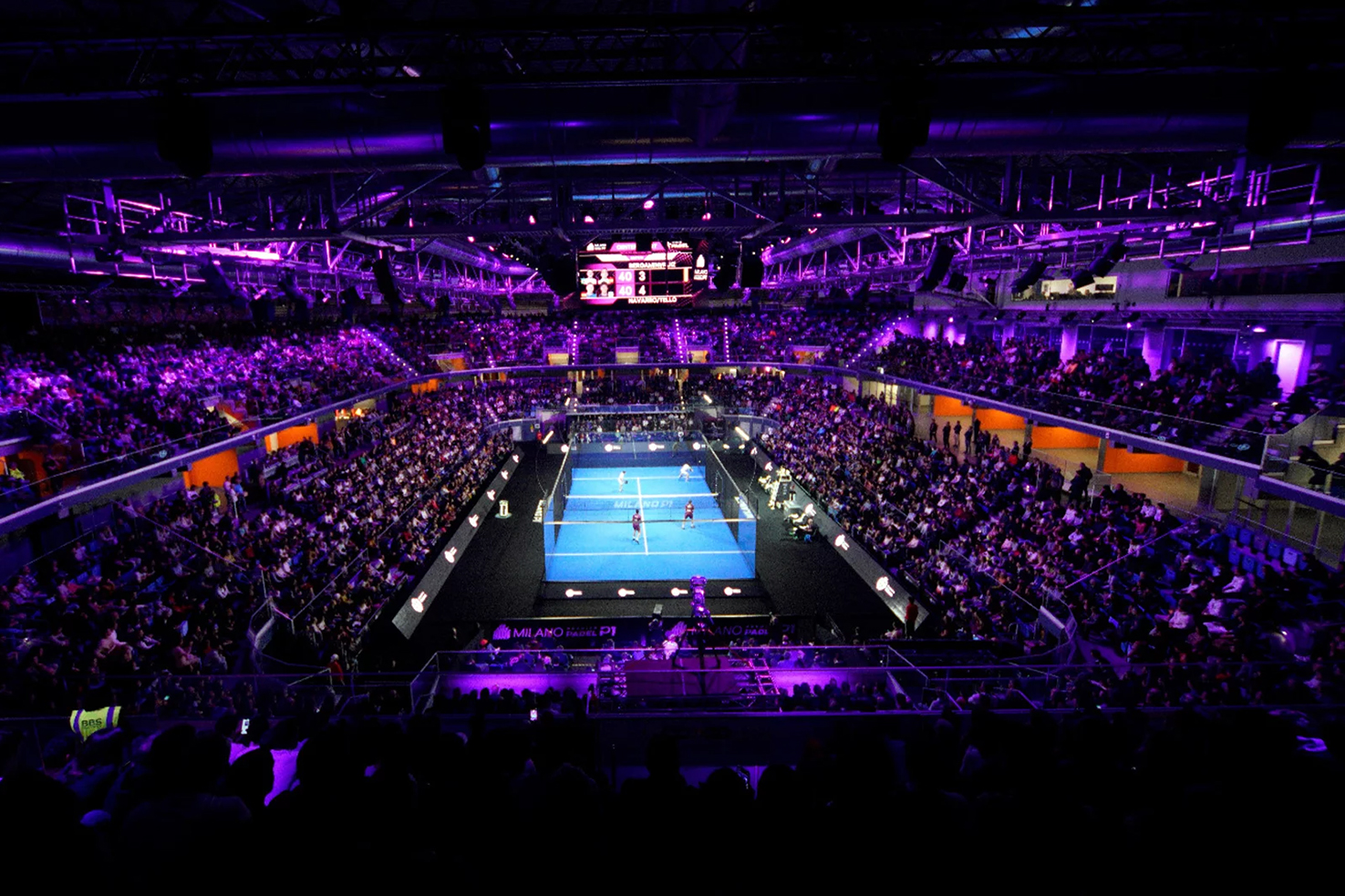
There was a time when staging a major padel tournament in Italy still meant introducing the public to something new. That time has passed.
When the OYSHO Milano Premier Padel P1 returns to the Allianz Cloud from 12 to 18 October, it will find a country very different from the one that welcomed its first editions. Padel no longer needs an introduction in Italy. It has found its way into everyday life, into conversations and, above all, into the country’s sporting culture.
Football, of course, remains in a world of its own. But behind it, the landscape is changing fast. Tennis and padel are enjoying an extraordinary moment and the latter has built a community in remarkably little time that goes far beyond the number of people simply playing the game.
Italy is now the second country in the world for the number of padel courts. Millions follow the sport and more than 160,000 players hold a national ranking. But numbers only tell part of the story.
Just look around.
Clubs have become meeting places. Rackets travel in the boots of cars. Matches are arranged between colleagues, friends and families. Names such as Tapia, Coello, Galán and Lebrón are no longer familiar only to the most dedicated followers of the sport.
And Milan is perhaps one of the clearest pictures of that transformation.
More Than Just a Tournament
At the last edition, more than 35,000 spectators walked through the doors of the Allianz Cloud during the week of the Milano Premier Padel P1. An impressive figure, but more importantly, proof that Italian fans have learned to embrace padel not only as a sport to play, but as a spectacle to watch.
Some of the credit must go to the organisers, who over the years have managed to build something that feels bigger than simply another stop on the professional tour.
Bringing the best players in the world onto a court is not enough. You need atmosphere. You need to bring the crowd close to the action and turn a day at the tournament into an experience.
In that respect, Milan has found its own identity.
The Allianz Cloud certainly helps: an intimate arena, spectators close to the court and that feeling of being almost inside the match, one of the qualities that makes padel so compelling to watch. But behind it is an organisation that, edition after edition, has managed to grow the event alongside the Italian padel movement itself.
And perhaps that is the real point.
The Milano P1 no longer comes to Italy simply to showcase the best padel in the world. It comes to a country that increasingly feels the sport is its own.
Italian padel has grown in numbers, clubs, crowds and its ability to create communities. But another important change is now taking place: Italian-born and developed players are beginning to make their mark too.
Giulia Dal Pozzo, world No. 26, and Flavio Abbate, No. 49, are perhaps the clearest examples of a new generation beginning to establish itself at the highest international level. And they are not alone, with several other Italian men and women now inside the world’s Top 100.
It is an important step. Italy is moving from being a country that embraced padel with extraordinary enthusiasm to one increasingly capable of producing its own protagonists.
So when the lights come on again at the Allianz Cloud and the best players in the world walk onto court, Milan will be telling a story that goes beyond another week of Premier Padel.
It will show just how far the sport has come in Italy.
Because padel no longer feels like a sport that arrived in Italy.
It feels like it has always belonged here.