
Sydney Opens a New Frontier for Padel
Australia could become the next major frontier in padel’s global expansion
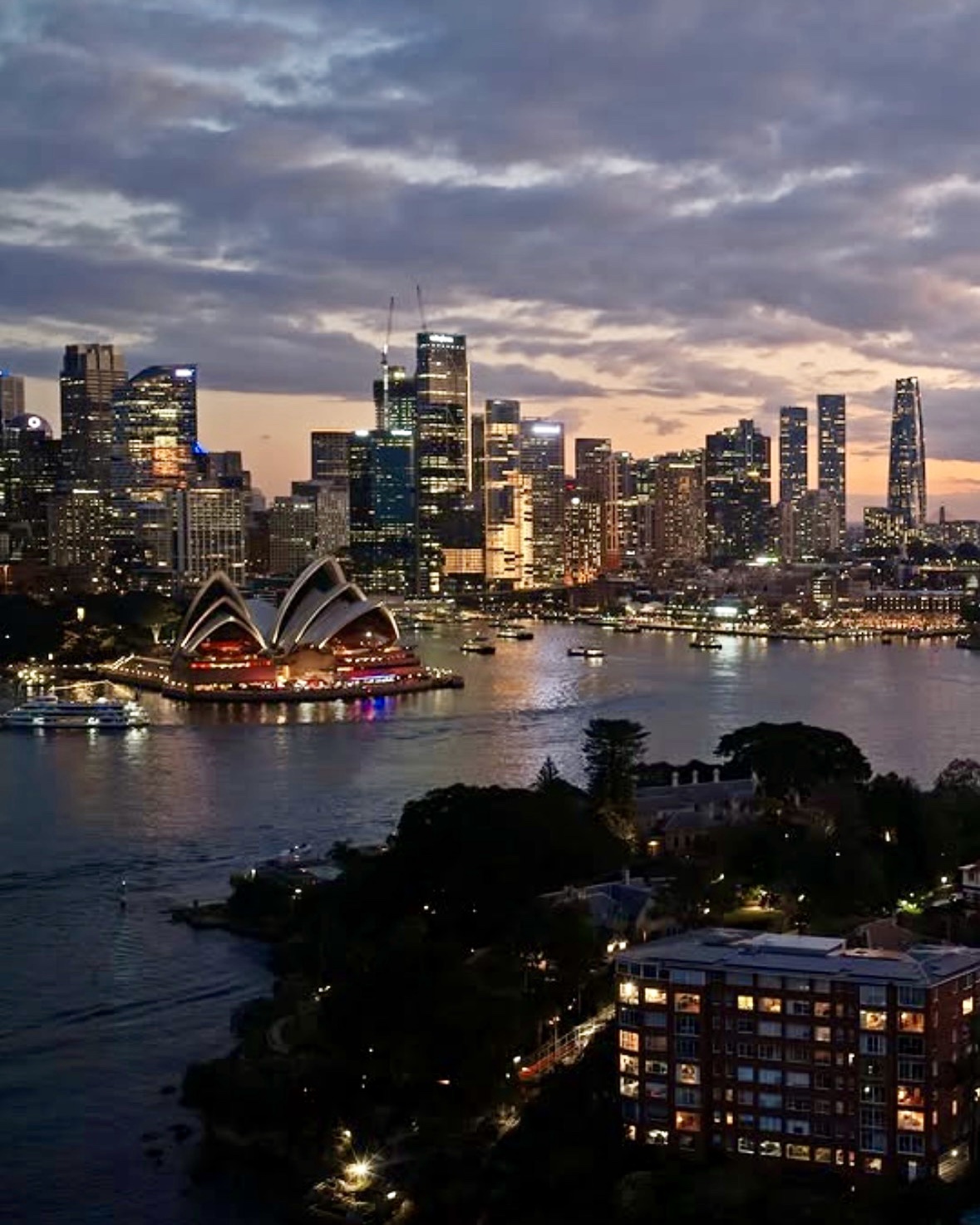
From the Sydney Opera House to a possible Premier Padel event in 2027, Australia could become the next major frontier in padel’s global expansion — and another important step on the road towards the Olympic dream of Brisbane 2032.
There are moments when a sport shows that it is becoming something bigger than the competition itself. This weekend in Sydney could be one of them.
On 15 and 16 August, padel has taken over one of the most recognisable locations in Australia: the Sydney Opera House. A custom-built court on the Northern Broadwalk, overlooking Sydney Harbour, has provided the stage for the inaugural Padel Invitational presented by UBS, an event created by Padel Australia in collaboration with Premier Padel and the International Padel Federation (FIP).
It is not an official Premier Padel tournament. But its significance could go far beyond an exhibition.
Because Sydney may be showing us where padel wants to go next.
Legends, champions and the next generation
The line-up itself tells the story of a sport capable of bringing together different generations and different countries.
Australian sporting icon Pat Rafter has been joined by some of the biggest names in padel, including Juan Martín Díaz, Alejandra Salazar, Maxi Sánchez, Martín Di Nenno, Pablo García, Marina Lobo, British No.1 Aimee Gibson and reigning Junior World Champion Mar Munera.
Another Australian tennis great, Casey Dellacqua, has also been involved in the event.
The combination is almost symbolic: former world No.1s alongside rising stars, established padel nations alongside an emerging market, and tennis champions discovering and promoting a sport whose international reach continues to accelerate.
Few names represent padel history better than Juan Martín Díaz and Alejandra Salazar. Díaz spent 13 consecutive years as world No.1, while Salazar, competing in her final professional season, has accumulated 59 career titles, reached world No.1 and won seven FIP World Championships with Spain.
Their presence in Sydney, together with younger talents such as Pablo García and Mar Munera, sends a powerful message: padel is bringing its history and its future to a new continent.
38 million players — and this may only be the beginning
The numbers explain why events like Sydney matter.
According to FIP, padel is now played by more than 38 million people across over 170 countries, with participation projected to exceed 105 million players by 2030.
What was once predominantly associated with Spain and Argentina has become an increasingly global sport.
And this transformation is not happening by accident.
The work carried out by the International Padel Federation, together with the expansion of Premier Padel, is progressively creating the structure required for padel to move from a rapidly growing sport to a truly global sporting movement.
FIP provides the international framework: federations, rankings, development pathways, international competitions and the expansion of the sport into new territories.
Premier Padel provides its global professional showcase, taking the best male and female players in the world to markets that only a few years ago would have seemed almost unimaginable for top-level professional padel.
The two structures increasingly complement each other: one builds the international foundations of the sport, while the other gives its elite competition a global stage.
Could Australia be next for Premier Padel?
And this is where the Sydney weekend becomes particularly interesting.
Reports in recent weeks have suggested that Australia is being seriously considered for inclusion in the 2027 Premier Padel calendar, potentially even as the opening event of the season.
For the moment, it is important to be clear: neither Premier Padel nor FIP has officially confirmed an Australian Premier Padel tournament for 2027.
But the possibility is credible.
Should it happen, its significance would be enormous.
Premier Padel already reaches Europe, the Americas, Asia and Africa. Australia would bring the Tour into Oceania, strengthening its claim to be a genuinely worldwide professional circuit.
In that context, the Sydney Opera House Invitational feels like much more than a spectacular weekend.
It can also be seen as a statement of intent.
Put a padel court in front of one of the most photographed buildings on Earth. Bring legends, current Premier Padel stars and young prospects onto it. Involve FIP, Premier Padel and the Australian federation. Introduce the game to a new audience.
And then imagine what could come next.
The road to Brisbane 2032
There is another destination on the horizon, however, and it is potentially even more important than a Premier Padel tournament.
Brisbane 2032.
Padel's ambition to eventually become an Olympic sport is no secret, and Australia could become a strategically important part of that journey.
FIP President Luigi Carraro explicitly connected the Sydney event with that long-term objective, describing the Opera House showcase as an opportunity to build momentum towards padel's Olympic ambition with Brisbane 2032 approaching.
Of course, staging an event in Sydney — or even adding Australia to Premier Padel in 2027 — would not automatically mean Olympic inclusion.
But every new federation, every new country, every junior programme, every international competition and every new Premier Padel destination strengthen one fundamental argument:
padel is no longer a sport belonging to a handful of countries. It is becoming a global sport.
FIP's strategy is also increasingly visible within the wider multi-sport environment. Padel is making its debut as a medal sport at the Mediterranean Games in Taranto in 2026, another significant institutional step in demonstrating that the sport can operate successfully within major international multi-sport competitions.
The challenge now is to continue expanding geographically while building the structures, participation and international credibility required for the next level.
And Brisbane 2032 inevitably represents a fascinating target.
More than an exhibition
That is why what happened at the Sydney Opera House should not simply be viewed as a collection of exhibition matches.
Celebrity 1 Point Padel, professional showcases, community sessions, Australia's leading club competitors and the opportunity for local players to step onto the same court as international stars were all designed to do something fundamental: make people experience padel.
Because global expansion cannot be achieved through professional tournaments alone.
People need to see the sport, try it, understand it and eventually become part of it.
This is perhaps where the combined work of FIP, Premier Padel and national federations such as Padel Australia becomes particularly important. Elite competition creates visibility; federations create structure; local development turns that visibility into participation.
Sydney brought all three elements together.
From Sydney to the world
The image of a padel court sitting beneath the sails of the Sydney Opera House is therefore much more powerful than it might initially appear.
It represents another geographical frontier being crossed.
From Madrid and Buenos Aires to Rome, Paris, Doha, Riyadh, London and potentially Sydney, padel's map continues to grow.
The possibility of seeing Premier Padel arrive in Australia in 2027 would be another major piece of that expansion. If confirmed, it would not simply be another tournament on an increasingly international calendar.
It would represent the arrival of professional padel on another continent and another step towards the objective that FIP and the entire padel ecosystem have been pursuing for years.
And somewhere beyond Sydney sits an even bigger stage.
Brisbane. 2032. The Olympic Games.
There is still a long road ahead before padel can reach that destination.
But if the sport wants to demonstrate that it truly belongs to the world, weekends like this one at the Sydney Opera House are exactly where that journey is built.